


It depends on where it is. If your crypto sits on an exchange, your heirs can claim it by providing proof of death and of their right to the estate. If you self-custody it and nobody has the seed phrase, it is lost: no company, court or notary can recover it. This guide explains the difference, what can still be tried if it has already happened, and how to make sure it does not happen to your family.
This guide is general information: for the legal and tax side of an estate, talk to a local notary, lawyer or tax adviser.

What is the difference between crypto on an exchange and in self-custody?
The difference is who controls the keys that move it.
| On an exchange | In self-custody | |
|---|---|---|
| Who controls the keys | The platform | The owner, through their seed phrase |
| How the family gets access | A claim to the platform with documents | Restoring the seed phrase (and passphrase, if any) in a wallet |
| Recoverable without the seed phrase? | Yes, if someone knows the account exists | No |
| Main risk | Nobody knows the account exists | Permanent loss |
If it is on an exchange
Platforms have a procedure for deceased users' accounts. Coinbase, for example, asks for the death certificate, documents showing who represents the estate, that person's ID and a signed letter of instructions, and it does not allow beneficiaries on individual accounts. Each exchange has its own list of documents: we go through them in what happens to your Bitvavo, Bybit or Bit2Me account when you die.
The problem here is rarely technical, it is about information: if your family does not know which platforms you use, they will not know who to claim from.
If you self-custody it
In self-custody there is nobody to claim from. Your crypto is still on the blockchain, in plain sight, but only someone with the seed phrase, and the passphrase if you used one, can move it. If nobody has them, it stays locked forever, even if your heirs are fully entitled to it. Neither your hardware wallet's manufacturer nor any court can regenerate those keys.
That is what happened to Manuel, whose story we tell in how Manuel lost 44 million in bitcoin: no death was needed, just losing the box where he kept his wallet and his seed phrase.
What can be tried if it has already happened?
If a relative has died and you do not know how to reach their crypto, follow this order:
- Find out where they held it. Check their email (exchange sign-ups and notices), their bank statements (transfers to platforms), the apps on their phone and their papers. If exchanges turn up, claim from each one using its procedure.
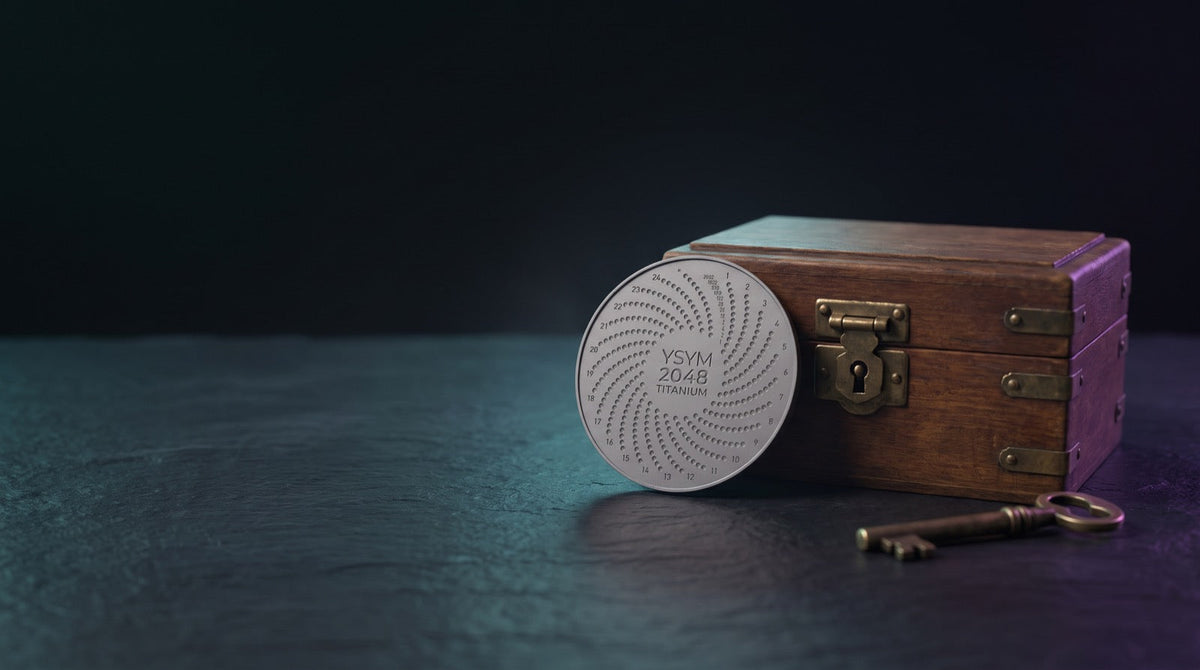
- Look for the seed phrase before touching anything. Papers, notebooks, safes, a metal plate or coin with words or dots engraved on it. A seed phrase is 12 or 24 English words, sometimes numbered.
- If you find a hardware wallet but no seed phrase, do not guess the PIN. These devices wipe themselves after a few failed attempts: Ledger devices after three, Trezor devices after 10 or 16 depending on the model. Get help from someone who knows that device first.
- If the wallet is on a phone or computer, the app may still be open, or may hold the seed phrase behind a password. It is only worth trying if you can access the device legitimately, and with technical help.
- If you have the seed phrase but one or two words are missing, there are still options. The words come from a list of 2048 and the last one includes a check, so the possible combinations can be tested. Always do it on an offline computer with someone you trust: never type a seed phrase into a website.
- If the wallet had a passphrase and it cannot be found, the seed phrase will only open the wallet without it. Without the passphrase, the protected funds cannot be recovered.
Be wary of anyone who promises to recover it. Financial regulators such as Spain's CNMV warn about firms that make unsolicited contact and ask for money upfront to recover losses, a fraud known as a recovery room. If someone asks for the seed phrase to "help you", do not give it to them: with it, they can empty the wallet.
For the legal side (probate, inheritance tax and how inherited crypto is declared), see how to inherit cryptocurrency. Rules depend on the country.
How do you make sure it does not happen to your heirs?
The aim is for your family to be able to reach your crypto when you are gone, and for nobody else to reach it while you are here. We call it sovereignty, and it means keeping the analogue and the digital apart:
- The seed phrase, engraved in full on a Yoseyomo. A piece of metal, never connected, that lasts far longer than paper. Never on your phone, in the cloud, in a photo or in an email.
- A passphrase that protects it. Without it, the seed phrase opens a decoy wallet with little inside. So if someone finds the Yoseyomo, they do not reach your funds.
- The passphrase and where the Yoseyomo is, in an Inheritans message. You describe the place without giving the exact address, using a reference only your family will understand. Inheritans encrypts the message on your device and delivers it only to the person you choose, and only when the time comes.
- A list of where you hold accounts, for the exchanges, without passwords or keys.
We explain it step by step, compared with the other options, in how to pass on your seed phrase to your heirs without putting it at risk.
Want to get it ready? Engrave your seed phrase on a Yoseyomo and leave the passphrase in an Inheritans message that only reaches your family when the time comes.
Related questions
Can the exchange give my crypto to my heirs? Yes, if it was held in an exchange account. Your heirs will need to prove the death and their right to the estate with the documents each platform asks for. The usual problem is that nobody knows the account exists.
Can a wallet be recovered without the seed phrase? In self-custody, no. The seed phrase is the only way to rebuild the keys. The only options are a wallet still open on a device you can access, or a seed phrase missing very few words.
What should I do if I find a hardware wallet but no seed phrase? Do not guess the PIN: these devices wipe themselves after a few failed attempts. Look for the seed phrase first and get help from someone who knows that model.
Are there companies that recover lost crypto? Be wary of anyone who contacts you unprompted and asks for money upfront to recover funds: regulators warn this is usually another scam.
How do I prevent this happening to my heirs? Engrave the full seed phrase on a metal backup, protect it with a passphrase and leave the passphrase, and where the seed phrase is, in a message that is only delivered when the time comes.
Share:
How to Inherit Cryptocurrency: A Complete Guide (2026)
How to Inherit Cryptocurrency: A Complete Guide (2026)